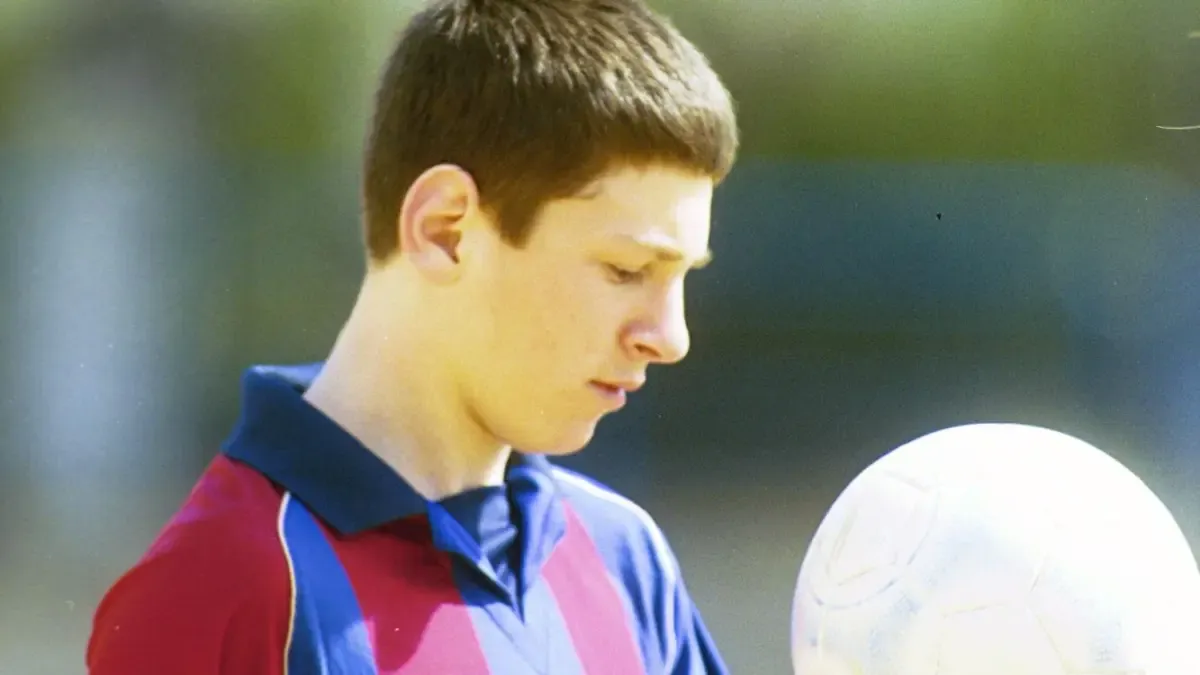
In the autumn of 2000, FC Barcelona welcomed a 13-year-old Argentine who, despite initial doubts, would end up becoming the club's greatest legend. The documents revealed by the French journalist Florent Torchut, author of the biography “King Leo”, show three different evaluations from La Masia coaches who evaluated Leo Messi in his first tests.
In the first report, the trainer highlights Messi's technical superiority compared to his peers. His vision of the game, agility, intelligence, dribbling and shooting power are mentioned, concluding that, despite his height of 142cm, he was a “very good player in the area” and “a great player”. The second report, more pessimistic, recognizes the Argentine's technical quality but emphasizes that his low physical development could become an obstacle to competing in higher categories. The coach advises against signing him and proposes re-evaluating him in a couple of years. The third report, for its part, defends the incorporation of the player, comparing him to a “small Maradona” and stating that, despite his physical limitations, “I would sign him” and that his evolution would be the key.
These three assessments reflect the uncertainty that surrounded Messi's signing. Although his talent was undeniable, the young man from Rosario's height and physique raised doubts about his ability to compete in professional soccer. Despite this, the club decided to bet on him and, over time, Messi surpassed all initial reservations.
During his career at the club, Messi played 778 official matches, scored 672 goals and helped win 35 titles, including 10 Leagues, 7 Copas del Rey, 4 Spanish Super Cups and 4 Champions Leagues. His career made him the top scorer in Barcelona history and one of the best players of all time.
Messi's case shows that, sometimes, the assessment of a young talent can be influenced by physical factors that, over time, become irrelevant. Barça's decision to sign him despite initial doubts turned out to be one of the most successful in the history of football.