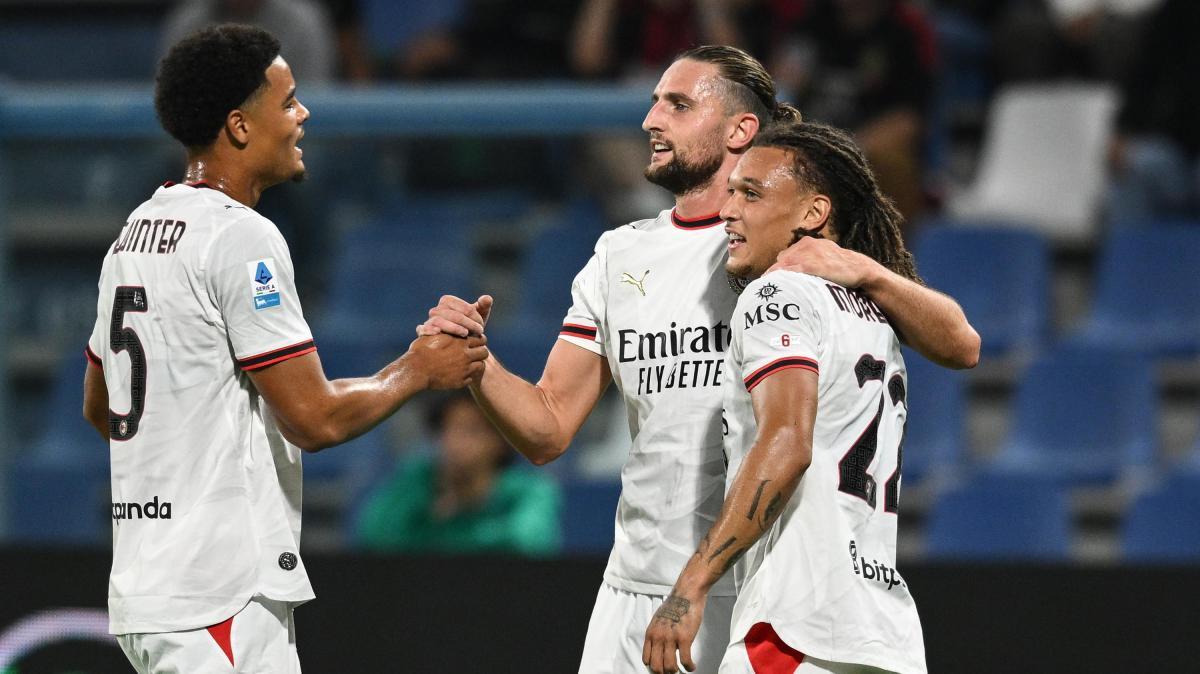
Ruben Amorim's Milan have demonstrated a curious attacking scheme in this season opener: most of their goals come between the 61st and 69th minutes. In particular, 8 of the 11 goals scored so far have been scored in that period of time, with exceptions only for Halhal's own goal and Moreira's goal in the 73rd minute against Lecce.
The first half was almost silent for the Rossoneri, with the only goal coming from Cristian Pulisic in the 14th minute of the match against Lecce. The entire rest of the season was characterized by late goals: Cisse scored in the 64th against Torino, Rabiot in the 66th in the same match, and so on, with both Moreira goals in the 65th and 67th against Lazio. The victory against Sassuolo also saw Rabiot's goal in the 64th minute, assisted by Modric.
This concentration of goals is often linked to team changes. In many of the matches, the introduction of a new player coincided with the moment in which Milan scored the goal: Rabiot came on and assisted Cisse against Torino, Saelemaekers made the difference against Venezia, and Cisse scored against Juventus. Even against Lazio, the three lineup changes, including the entry of Moreira, preceded the goals.
The result against Sassuolo, although dominated from the start, still required a change to consolidate the superiority. Rabiot's goal, which came on an assist from Modric, confirmed the importance of these moments of pressure and tactical intervention. Milan, therefore, seems to have identified a crucial moment of the match in which its offensive strength is most effective, and this could influence its future strategies.