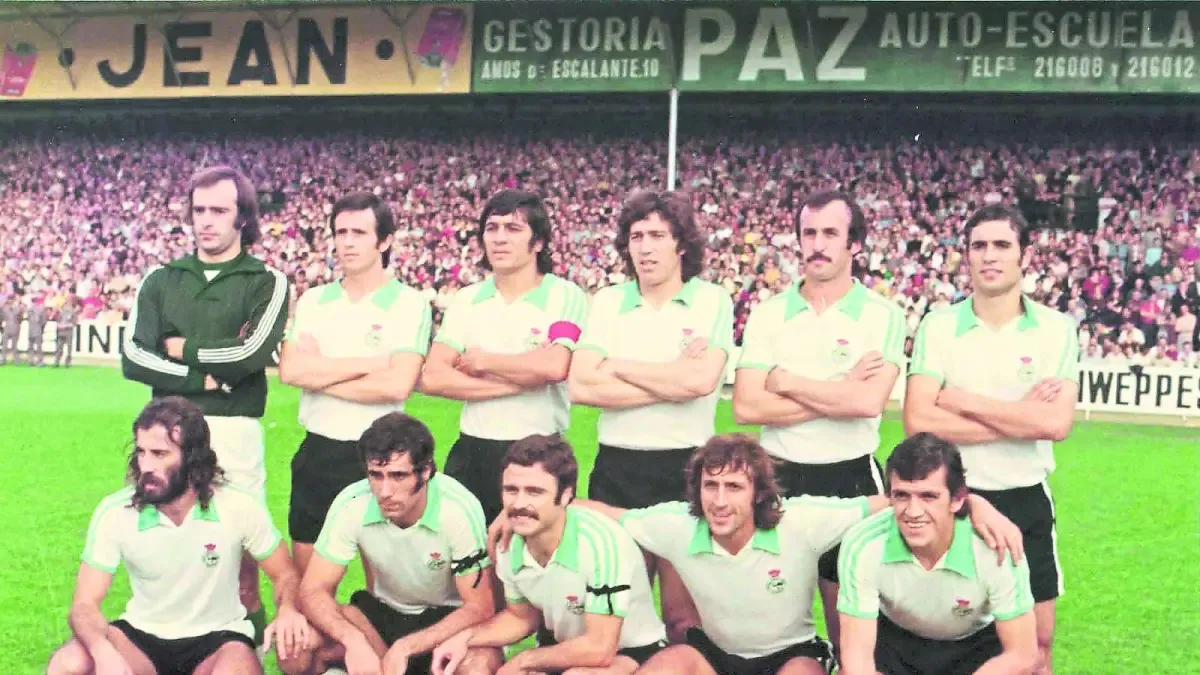
On September 18, 1975, during the match between Racing de Santander and Elche, two Racing players, Aitor Aguirre and Sergio Manzanera, carried out a silent protest that was recorded in the club's history. With the laces of their boots tied in the form of black bracelets, they showed their mourning for the last executions of the Franco regime, which had occurred on Saturday the 27th of that same month, when the Government of Luis Carrero Blanco approved the death penalty and five anti-Franco militants were shot. The action of the two footballers coincided with Franco's death two months later, and sport in general showed almost no response to the repression.
Aguirre and Manzanera's gesture occurred in a context of growing political and social tension. The two players, who had forged a deep friendship at the club, decided that, as public figures, they could influence public opinion. According to Aguirre's own statements in 2025, “we were public people and we knew that our protest could have an impact.” The protest was planned at the Hotel Rhin, where they listened to the clandestine Radio Pirenaica and realized the need to act. Aitor, a native of Sondika and from a family with nationalist roots, and Sergio, of Valencian origin and with a Republican father, shared a common vision of the injustice of the regime.
During the match, the crowd did not immediately notice the armbands. The civil governor of Santander, Carlos García-Mauriño Martínez, asked the president of the club, José Manuel López-Alonso Polvorinos, about the black badges, to which the president did not know how to answer. At half-time, the players were confronted by police who demanded that they remove their bracelets under threat of arrest and reporting to the police station the next day. Racing won 2‑1, with Aguirre scoring both goals, one assisted by Manzanera. Before going to the police station, López-Alonso suggested that they justify the protest as a tribute to the club's deceased president, Ramón Santituste García, to avoid further repercussions.
The authorities, upon discovering the protest, imposed sanctions of 300,000 pesetas, reduced to 100,000, and initiated an investigation under the Anti-Terrorism Law. The prosecutor requested five years in prison, but Franco's death and the lack of international pressure diluted the case. Despite the pressure, both players continued their careers: Aguirre played 18 seasons and founded a renowned steakhouse in Getxo, while Manzanera retired at the age of 28 due to an injury, studied medicine and worked as a dentist in Valencia.
Aguirre and Manzanera's gesture also resonated in popular culture. In 1974, Luis Eduardo Aute composed “Al alba”, and in 1975 the singer Rosa León, moved by the shootings, transformed the song into a symbolic song to those who were retaliated against. This episode, although brief, showed how sport could become a scene of political protest in transitional Spain, leaving a mark that, although little recognized at the time, continues to be remembered by Racing fans and by the history of Spanish football.