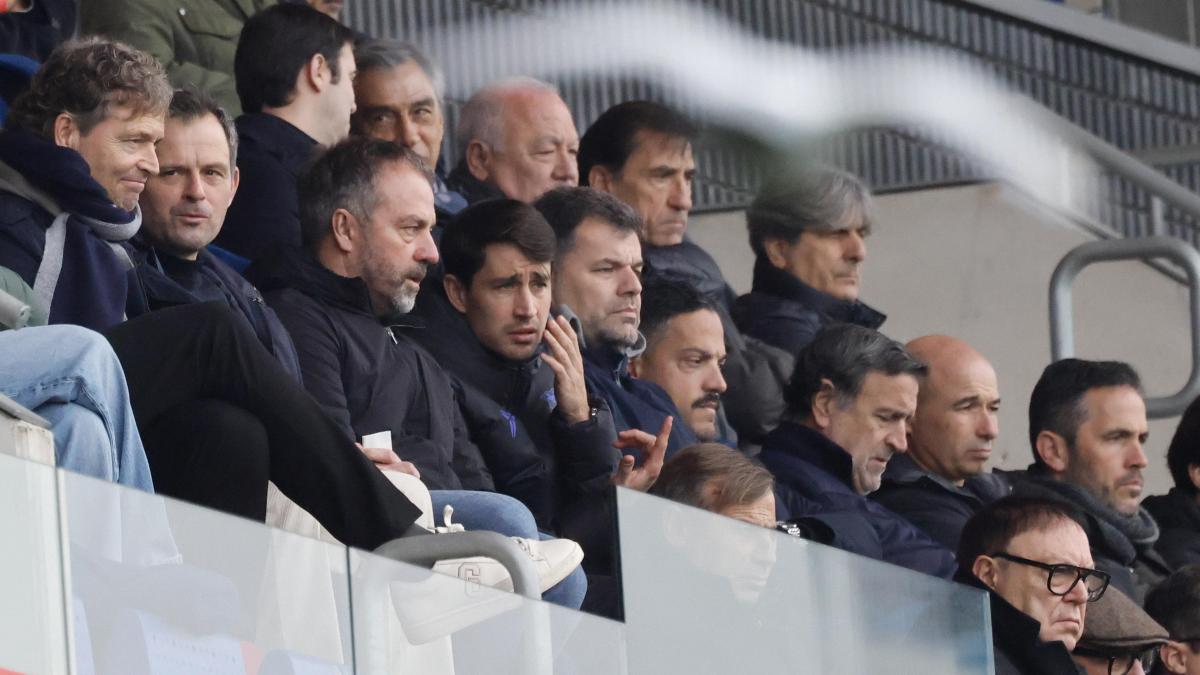
FCBarcelona's head of scouting, JoãoAmaral, has revealed in a recent podcast how the club combines technology with intuition to discover and sign new talents. In “The Pitch Invaders 358” by Footure, Amaral explained that the selection process is not based solely on numerical data, but also requires direct observation and in-depth analysis of the player's environment.
Amaral maintains that, although the data is abundant, “we lose sight of the most important thing: the intuition and sensation when watching a live match.” For him, identifying the most obvious players is simple; The real challenge is finding those that fit the specific needs of the team. Therefore, before making a final decision, the club requires that the scouts see the candidate in action, since in-person observation reveals tactical details and attitudes that sometimes do not appear in the recordings. “When a scout feels in his heart that a player has something special, he must write it down and highlight it,” says Amaral.
The process begins with the definition of the squad's needs, in collaboration with football director Deco and coach HansiFlick. From there, the Data Intelligence department establishes indicators by position to filter candidates. The scouts closely follow the selected players, and in the final phase the data is crossed again to compare the profiles with the demands of the coaching staff. The final reports are purely descriptive and cover the physical, technical and tactical profile, concluding with a summary of the player's performance in the match.
Amaral also emphasizes the importance of traveling constantly. “Traveling is non-negotiable; it is an essential part of my work methodology,” he says. In addition, the club has eliminated numerical scores from zero to ten from its reports, opting for descriptive assessments focused on physical, technical and tactical aspects. Analysis of the player's environment is also key: knowing the family and environment helps to evaluate the psychological stability and the player's ability to adapt to the locker room and the city.
As an example of the application of this model, Amaral cites the signing of VítorRoque, a Brazilian forward who arrived at Barça in January. The attacker's profile fit the club's playing philosophy, but his incorporation during the season forced him to face immediate pressure. “If we don't learn from mistakes, we don't evolve,” concludes Amaral, pointing out that Roque's case continues to serve as a reference for future transfer decisions.