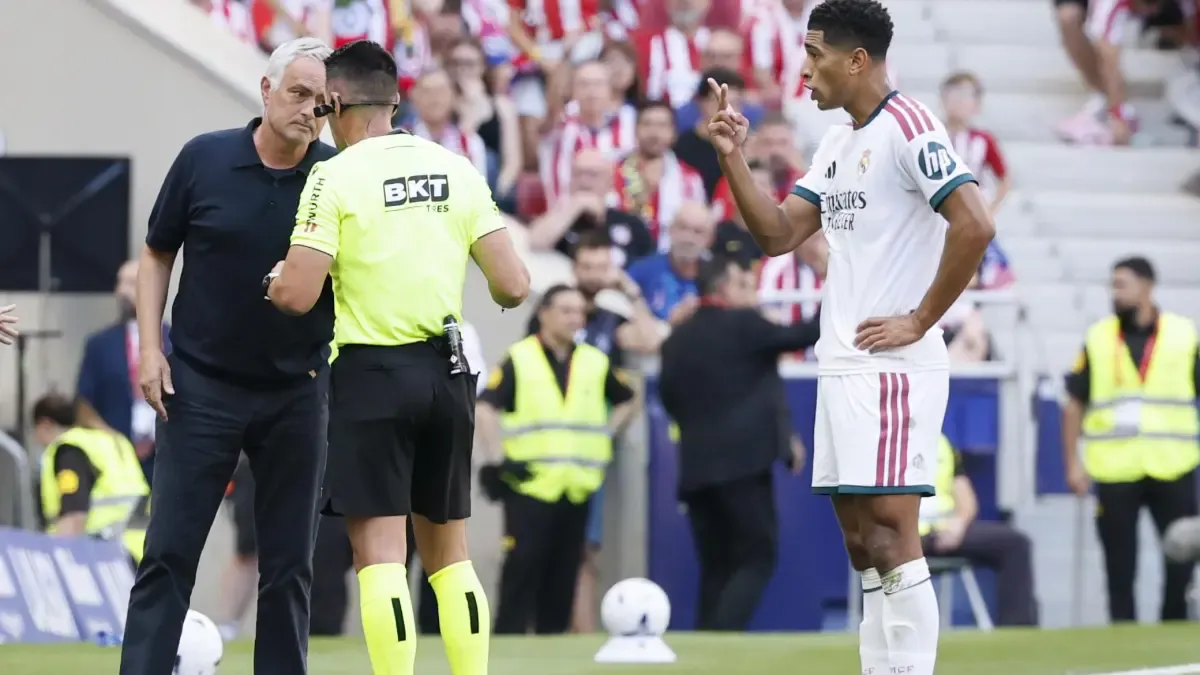
The Technical Committee of Referees (CTA) has expressed its concern over the growing tension surrounding Real Madrid matches, especially with the imminent arrival of the Clásico against Barcelona. According to statements collected by the SER network in its program “El Larguero”, the CTA fears that the pressure on the referees will increase in the next two weeks, when HansiFlick's team, which leads the league with six points ahead of Real, faces José Mourinho's club, which is going through a sporting crisis that has caused the white team to concentrate almost exclusively on refereeing issues.
The atmosphere of uncertainty is not new. Referees have long denounced the perception of bias in Real Madrid matches, and in the recent match against Villarreal the controversy was evident when Vinicius was sent off after "grabbing Saliba's hair." Coach Mourinho, visibly upset, chose not to speak to the media after the result. This episode, along with other matches where the white club has won by the minimum, has fueled the suspicion that the referees could be influenced in their favor.
In the SER program it was highlighted that "in all levels of the refereeing team there is concern about everything that is generated around all the games that Real Madrid plays, in the club, in the stands and in the media, in the entire environment." The CTA warned that the tension perceived by the referees “is going to increase” when facing Barça, and that the escalation of animosity may not stop without clear intervention. “They DO NOT know when or how it is going to stop,” commented a CTA spokesperson, underlining the urgency of managing the situation before the Classic generates a major conflict.
The next Clásico, scheduled for the Camp Nou in two Sundays, will be a key moment for refereeing. Referees will have to maintain impartiality in the face of pressure from fans and the media environment, while Real Madrid seeks to consolidate its leadership position and Barcelona tries to regain the advantage. The CTA has asked the federation and the league to take measures to guarantee the integrity of the matches and prevent the perception of bias from becoming a reality that affects the competition.
With the Classic in sight, attention will focus on how the refereeing will handle the intensity of the match and whether the CTA's concerns materialize in controversial decisions. The result of the match will not only determine the direction of the table, but will also test the referee system's ability to operate under pressure without compromising sporting justice.