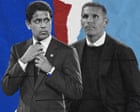
Manchester City’s recent Champions League clash with Paris Saint‑Germain at the Etihad Stadium served as a stark reminder of the long‑standing financial disputes that have shadowed both clubs. The match, which took place on Wednesday, highlighted how far the two teams could have fallen had the Premier League’s guilty verdict not been issued earlier.
Both clubs share a history of breaching UEFA’s financial fair play regulations. In 2014, investigations revealed that PSG had run a €218 million deficit and City a €188 million deficit between 2011 and 2013, far exceeding the €45 million loss limit for clubs in European competition. Instead of facing severe sanctions, the clubs signed settlement agreements that capped penalties at €20 million each and imposed stricter spending restrictions for subsequent seasons. A further €40 million was to be paid if either club violated the terms. UEFA declared in April 2017 that both clubs had “fully complied with all the requirements,” but questions remained about City’s adherence to the spending limits.
The controversy intensified in 2020 when UEFA’s investigatory chamber suspended City from the Champions League for two years over allegations of overstating sponsorship revenue between 2012 and 2016. An appeal to the Court of Arbitration for Sport overturned the decision, ruling that most breaches were unsubstantiated or time‑barred. More recently, an independent commission convened by the Premier League found that City had been “significantly in breach” of UEFA’s spending limits between the 2009‑10 and 2017‑18 seasons, and had “filed misstated accounts and concealed the true state of its finances.” City has appealed the commission’s findings.
PSG, led by Qatar‑based president Nasser al‑Khelaifi, faced a €10 million fine in 2022 for non‑compliance with financial rules since 2018, with an additional €50 million suspended. Al‑Khelaifi’s frustration with the Premier League’s timing of the verdict stemmed partly from the fact that the release of the commission’s report coincided with the European Football Clubs’ (EFC) general assembly in Copenhagen, where he delivered a keynote speech. In that address, he outlined plans to globalise the EFC and criticized FIFA president Gianni Infantino over governance issues—an approach that contrasts sharply with his earlier stance a decade ago.
Investigations by the German magazine Der Spiegel in 2018 alleged that Infantino, then UEFA’s general secretary, had facilitated secret talks with PSG and City to secure lenient settlements in 2014, even providing confidential materials. An email from Infantino to City’s chair Khaldoon al‑Mubarak, dated 2 May 2014, hinted at the wording of the proposed settlement. The head of UEFA’s investigatory chamber, Brian Quinn, resigned amid concerns that the agreements were too soft. UEFA’s statement at the time emphasized that settlements were preferred when clubs overspend and balance books only through external injections, focusing on limiting non‑football revenues.
Today, PSG presents itself as compliant with sporting regulations, while City continues to challenge the system, with many fans openly expressing dissent by booing the Champions League anthem. The match at the Etihad not only showcased the on‑field rivalry but also underscored the divergent paths the clubs have taken in navigating the complex world of football governance. As the season progresses, both teams will watch closely how UEFA and the Premier League respond to the latest findings, and whether the ongoing appeals will alter the balance of power in European football.