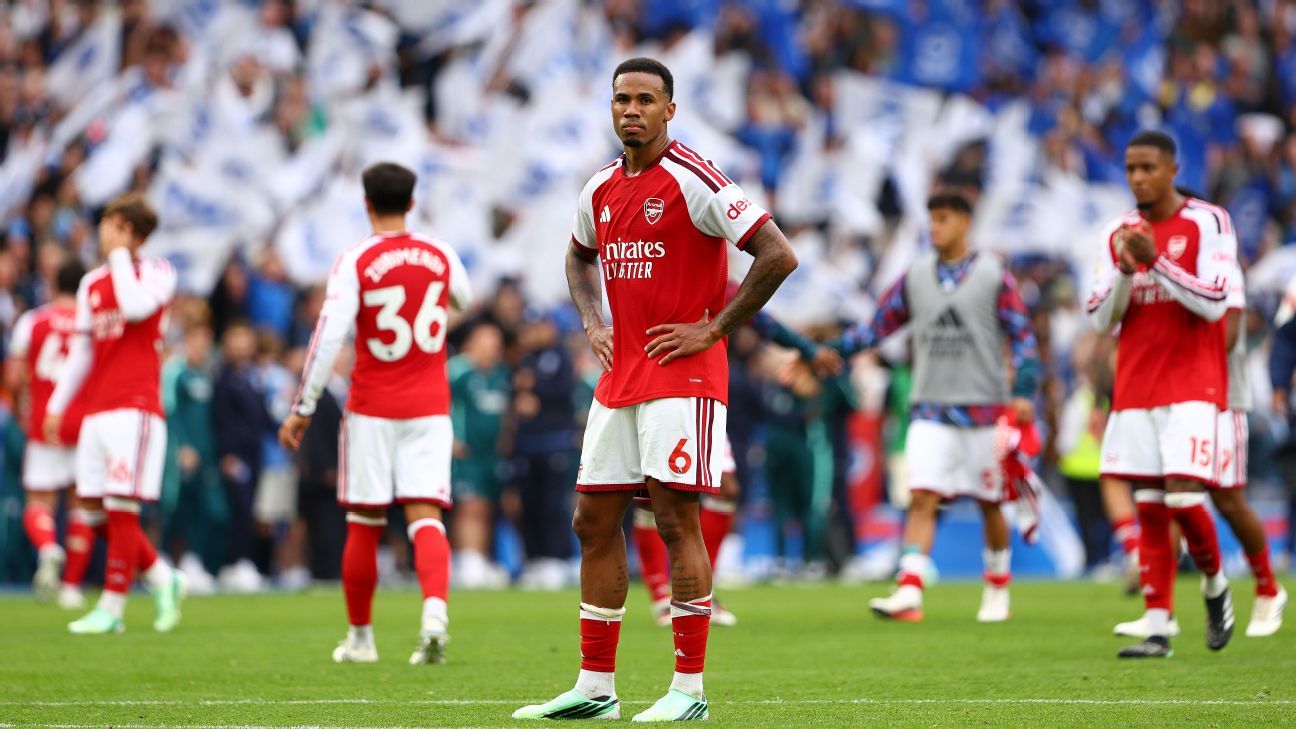
The Premier League has returned to full force after a three‑week international break, and with the season now 33 games in, the table has been re‑ranked for the first time since the start of the campaign. The latest rankings, compiled by Bill Connelly and Ryan O’Hanlon, show that Arsenal’s position has slipped, while Chelsea’s struggles have become more pronounced. The re‑ranking also highlights the volatility of the league, with several clubs still fighting for European places and a title race that could still see Manchester City and Arsenal duel for the top spot.
Arsenal’s decline has been attributed to a combination of defensive frailties and a lack of attacking depth. The Gunners’ last five matches have yielded a modest 1.5 expected goals (xG) per game, down from 1.6 the previous season, while their conceded xG remains steady at 0.7. A recent 3‑0 loss to Brighton, where the Seagulls outshot Arsenal 17‑11, exposed the team’s vulnerability against teams that can press high and create chances. Despite the return of key attackers—Martin Odegaard, Bukayo Saka, Kai Havertz and Riccardo Calafiori—all five players have started every game after missing significant time last season. Havertz has already suffered another injury, raising concerns about the squad’s ability to maintain offensive output over the remaining fixtures. Set‑piece creation has also been limited, with Arsenal ranking ninth in xG from set‑pieces so far, and new signing Bruno Guimarães has yet to make a noticeable impact in the first five games.
Manchester City, meanwhile, faces a different set of challenges. The club is dealing with the fallout from 114 guilty charges, a situation that could potentially affect their standing in the league. Defensively, City have conceded the highest xG in a home Premier League match over the past five years, indicating a vulnerability that could be exploited by rivals. The combination of legal scrutiny and defensive exposure has made City’s title prospects more uncertain than Arsenal’s single poor outing.
Brentford’s early season form has been impressive, sitting fourth in the table after five games. The Bees have secured two 3‑0 victories over Tottenham and Chelsea, giving them the third‑best goal differential in the league and a positive xG differential of +3.6. Their style of play, characterised by directness and efficient ball progression, has been a key factor in their success. Key performers include Vitaly Janelt, who leads the league in interceptions, and Kevin Schade, tied for third in league goals. Despite a lack of depth compared to the league’s wealthier clubs, Brentford’s cohesive system and tactical clarity have kept them in the conversation for a top‑five finish.
Leeds United have shown that they can compete for European qualification. Since December 1, the club has accumulated 45 points, placing them sixth in points per game and eighth in xG differential for the period. Their defensive record has been solid, with opponents attempting shots worth 6.5 xG and scoring only three goals. New centre‑back Tarik Muharemovic has contributed to a robust defensive structure, while goalkeeper James Trafford has been a reliable last line of defence. Leeds’ recent draws have kept them in the mix, and their continued performance suggests they could secure a European spot if they maintain their form.
The remainder of the season will test whether Arsenal can recover from their recent setbacks, whether Manchester City can navigate the legal and defensive challenges, and whether clubs like Brentford and Leeds can sustain their early momentum. As the Premier League approaches its final stages, the standings remain fluid, and the outcome of the title race and European qualifications will hinge on consistency, squad depth, and the ability to perform under pressure.