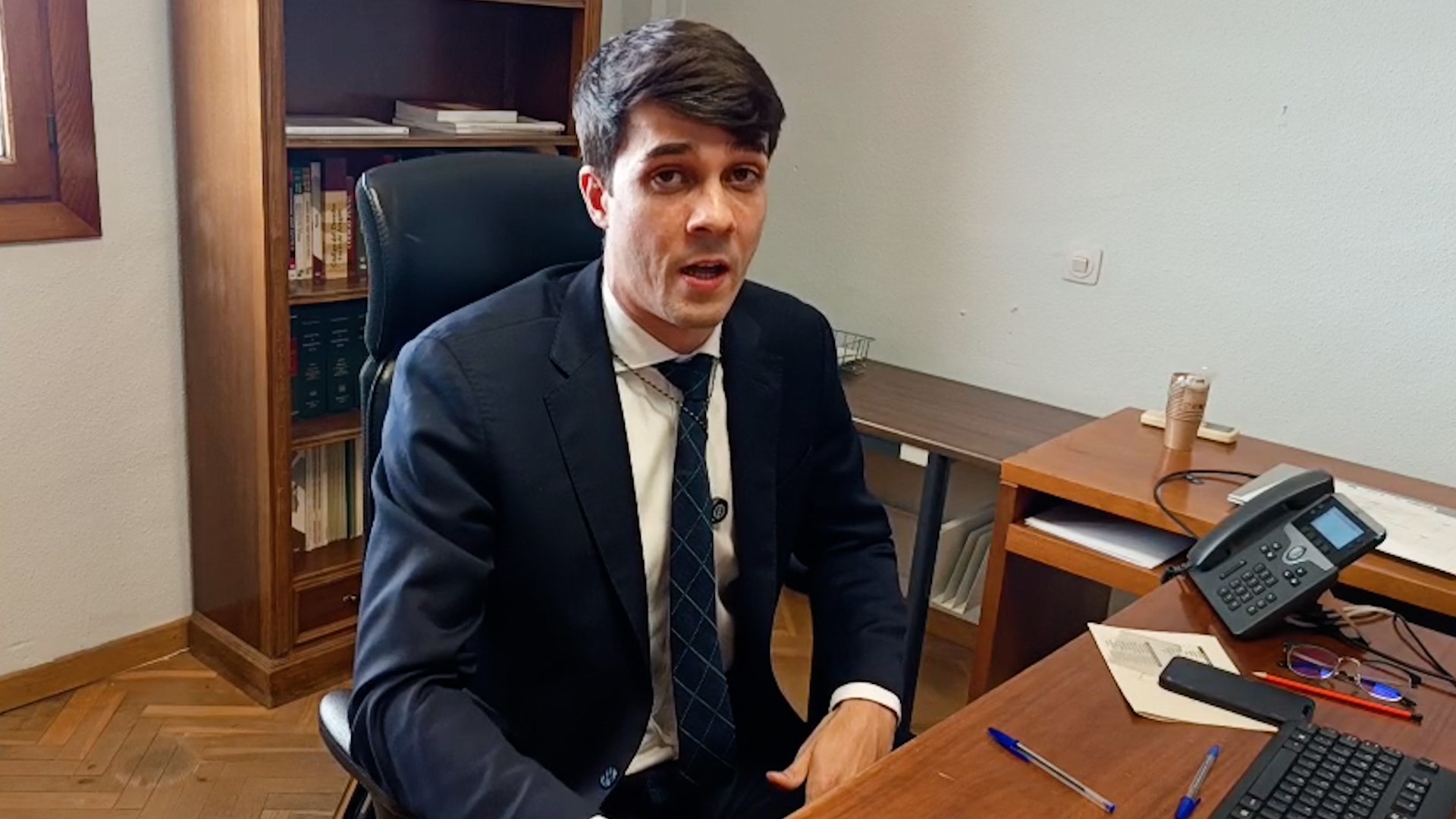
Javier Alfonso Martínez Tabernero, former defender of Osasuna, has become chief judge of the Court of First Instance and Instruction of Ejea de los Caballeros, in Zaragoza, after a career that has gone from training three hours a day to studying six days a week. The transition occurred after a career marked by constant injuries that led him to retire from football at the age of 23 and embark on a career in Law, which culminated with his appointment in February 2026.
Martínez began his sporting life at the Oscense Football School and the Peñas Oscenses, before signing for Osasuna at the age of 14. His debut in the first team came on October 17, 2015, when, at the age of 18, he replaced the legend Nino in a match against Albacete. Throughout his time at the club, the young defender was involved in a series of injuries which he claimed were due in part to a difference in length in his legs. Despite having high-level physiotherapists and specialized treatments, Martínez's physical and mental health deteriorated, leading him to decide to abandon football in December 2020.
The decision to leave the sport was not easy. “When I left football, the boredom was such, the frustration was such, that starting to study and lead a sedentary life seemed good to me,” Martínez confessed. During the following years, he reduced his weight from 78 kilos to 66, he dedicated himself to preparing for the competitive examinations and, in November 2023, he managed to pass the entrance test to the judicial career. His time at the Barcelona Judicial School and his internship allowed him to acquire the necessary experience to assume his new role.
The first case he faced as a judge was that of the appearance of human remains in the Yesa reservoir, a crime that was initially considered under the jurisdiction of Ejea. "At first the truth is that it gives respect. You have studied and prepared, but you have doubts," Martínez commented. The case became more complex when the investigation revealed that the homicide had been committed in Pamplona, which forced the judge to exercise his jurisdiction at the scene of the crime. Despite the pressure and the accusation of politicization of justice, the judge maintained his professional stance and was willing to assume the responsibility that his position entailed.
With his appointment, Martínez highlights the proximity and variety of powers offered by a town court, where he can address cases of gender, family, civil and investigative violence. “It's nice to start here, because in the end the deal is much closer,” he says. Its story, which combines the discipline of sport with the rigidity of law, serves as an example of resilience and adaptation in the face of personal and professional challenges. The next stage of his judicial career will be to continue handling cases that arise in the region, applying the law with the same dedication that he showed on the playing field.