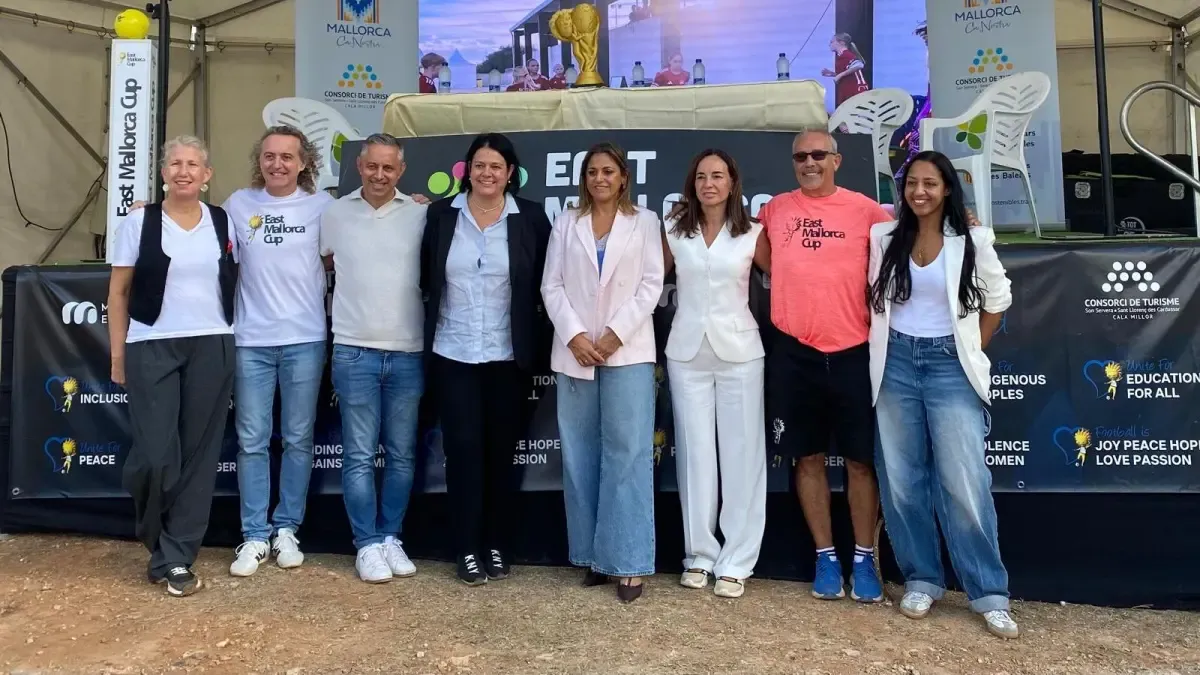
The eighth edition of the EastMallorcaGirlsCup, which was held from October 14 to 18 in CalaMillor, became a meeting point to discuss the future of women's football. At the round table, present in the center of the competition, key sports figures met: BeatrizÁlvarez, president of the LigaF; DolorsRibalta, director of women's football at RCDEspanyol; TatianaFerrer, president of the SportsforEquality Association; Inés Batle, president of the BahíadeCalaMillor-SaComa Hotel Association; and the journalist BegoñaVillarrubia from MundoDeportivo. The conversation, moderated by AlmaMarín, addressed the present and future challenges of women's football, highlighting the need to continue promoting the discipline, investment and visibility of the sport.
BeatrizÁlvarez opened the debate by pointing out that LigaF has gone from a construction phase to a consolidation phase. He mentioned the rapid rise of Spain's first professional league, which was established in just four years, and warned that success should not give rise to complacency. According to Álvarez, it is essential to continue investing in the competition and in the creation of references that inspire new generations. In this sense, he highlighted the role of clubs in the development of role models, since girls who participate in tournaments such as the EastMallorcaGirlsCup already admire world-class footballers such as AlexiaPutellas, AitanaBonmatí or MarionaCaldentey. Recent surveys reveal that more and more young people want to become footballers when they grow up, something unthinkable just a few years ago.
DolorsRibalta, for her part, emphasized that talent alone is not enough. “In the quarry you need talent, but also discipline, sacrifice and, above all, an environment that helps the player to continue growing,” explained Ribalta. From Espanyol's perspective, training must be accompanied by comprehensive support that allows young women to overcome the challenges of sports development.
TatianaFerrer echoed the importance of collaboration between institutions, clubs and federations to use football as an engine of social change. The president of DeporteparalaEgualdad highlighted the projects with boys and girls with fewer resources, including initiatives in the favelas of Brazil, where sport becomes a tool for inclusion and transmission of values.
BegoñaVillarrubia analyzed the media evolution of women's football, going from a marginal space to one with growing following and expectation. Villarrubia stressed that the challenge now is to consolidate that attention and guarantee a constant presence in the media, beyond large events. InésBatle, for her part, recalled the enthusiasm and enthusiasm with which the girls participate in the tournament, which has established itself as an international reference and continues to grow with each edition.
The EastMallorcaGirlsCup, with 73 clubs from 20 countries, included teams from Germany, Australia, Denmark, Canada, Italy and Japan, among others. The competition featured the participation of top-level clubs such as FCBarcelona, RealMadrid, Chelsea, SportingPortugal and ManchesterCity in the under-12, under-14 and under-16 categories. Thus, the tournament is consolidated as an international showcase for young talent and a platform to continue promoting women's football from the grassroots, with an eye toward a future where discipline, investment and visibility continue to grow.